
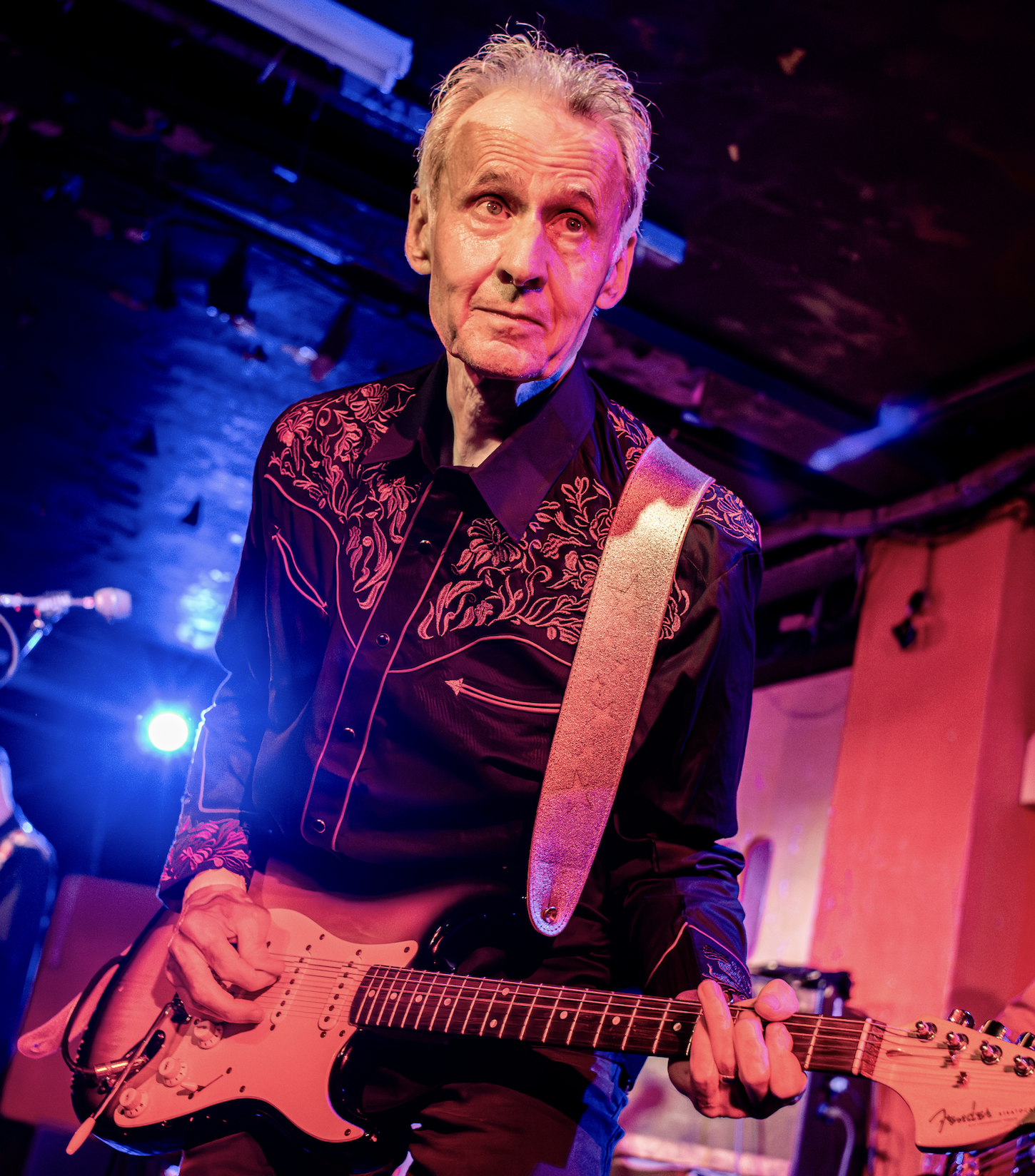
David Sinclair
Vocals/guitar
BIOGRAPHY
David Sinclair began his musical adventure as a drummer with London bands Blunt Instrument and London Zoo before joining TV Smith’s Explorers, playing on singles including Tomahawk Cruise and the album The Last Words of the Great Explorer. He later moved to the front of the stage as a singer, songwriter and guitarist. His first two albums were produced by Gareth Parton (The Go! Team), while 2011’s Take Me There was produced by Jordan Fish, later of Bring Me The Horizon, and featured Paul Jones on harmonica. Robin Trower produced the album’s lead track Living Like a Yo-Yo.
Alongside his own music, David has pursued a long career as a music journalist, writing for The Times of London (1985-2015) and many other publications. He formed his own group at a recording session in Shepherd’s Bush on New Year’s Eve 2004 and has led it to this day.
Q&A
What was the record, musician or gig that first established the direction you were heading in musically?
There were three. Come On by the Rolling Stones in 1963. I remember seeing them perform it on Thank Your Lucky Stars, although the memory may have grown in the telling. Then came John Mayall’s Blues Breakers with Eric Clapton in 1966. The “Beano” album was a gamechanger, musically and sonically, and my introduction to the blues. And then Are You Experienced by the Jimi Hendrix Experience in 1967. Hendrix was the complete singer-songwriter and guitar virtuoso in one celestially romantic package. That set the direction.
How did DS4 begin - and when did it first feel like a real band rather than simply your own musical project?
It began as a David Sinclair recording session at the Stone Room in Shepherd’s Bush on New Year’s Eve 2004. I’d been offered some studio downtime and went in to record Dusted & Rusted with Drew Farmer on drums and Elizabeth Kinder on bass, produced by Gareth Parton. It felt like a band immediately. When George Andrew replaced Elizabeth on bass and vocals we became the David Sinclair Trio. Drew was later replaced by my son Jack Sinclair, on drums and vocals. Then in 2013 Geoff Peel sat in with us at the 100 Club and played another gig with us a few days later at the Tropic in Ruislip. That was the point at which DS4 was born.
What do you enjoy most about playing in DS4?
The band is the creative dynamo of my life. It gives me the incentive to keep writing songs, making records and playing live. For all the different things I do - singer, songwriter, guitarist - I think being a bandleader may be the most important. I’ve always admired John Mayall for that. He marshalled all these musicians, many of whom were technically much better than he was, and kept his band going. He was a facilitator as much as the marquee name. Keeping my own band together continuously since the final day of 2004 is probably my defining musical achievement.
Apart from your instrument, what do you bring to DS4?
The songs - and specifically the lyrics. I never thought there was anything particularly special about my lyrics. Songs needed words, so I wrote them. Then in 2005 Alan Levermore at Proper told me it was the lyrics that had swung their decision to distribute my first album, which surprised me.
People come up after gigs and say they hear the words and remember them. I think it’s important that the songs come from where I actually live. “I’ve been around, I had a long career / I’m not American, I come from here.” (Sweet Georgina)
Which DS4 song do you most enjoy playing, and why?
Right now, I’d say Perfect In Every Way. It’s been through a lot of different incarnations. Whenever I sing it I’m taken back to the rehearsal studio in Bath where I wrote it, and to the girl that inspired it. George supplied an amazing bass line and harmony to the original recording. And Geoff has now made the guitar part and BVs very much his own.
What’s the best or most memorable DS4 moment you’ve experienced so far?
We were playing in Scotland in October 2025 and were driving south from Edinburgh towards the M6. We came through this mist and suddenly the sun broke through. There was something magical about simply being on the road with the band, heading home after the shows. I remember thinking: this is it. We’re living the dream.
There have been bigger moments - selling out the Borderline for the Yellow album launch in 2015 and headlining the 100 Club in 2026 - but that quiet moment on the road somehow captured it for me.
What do you take almost as seriously as music?
Tennis. I compete in the West Middlesex league.
What happens to a song when you take it from writing it alone to playing it with DS4?
There are two main routes. Sometimes I send a song to Jack, who has great ears and the technical ability to hear what a basic track could become. At a very low point I sent him a one-verse guitar-and-vocal sketch called Apropos Blues, really just to give myself something to do. Jack added drums and bass and suddenly it sounded like a record. It became the title track of our sixth album. That album probably wouldn’t exist without that demo.
The other route is to play something to Geoff and keep working on it together. Sweet Georgina took months. We changed middle-eights, lyrics, all sorts of things. At one point it was called Anglicana. Geoff suggested Sweet Georgina - exactly the same scan, but suddenly we had a girl and a much better song title.
After more than 20 years of keeping the band going, what are you still trying to achieve with it?
The next stage. Headlining the 100 Club in 2026 was the biggest gig we’d played in our own right, and in 2027 we’re booked for blues festivals in Blackpool, Carlisle, Whitby and Glasgow. I want DS4 to become better established and get our foot onto the next rung of the ladder
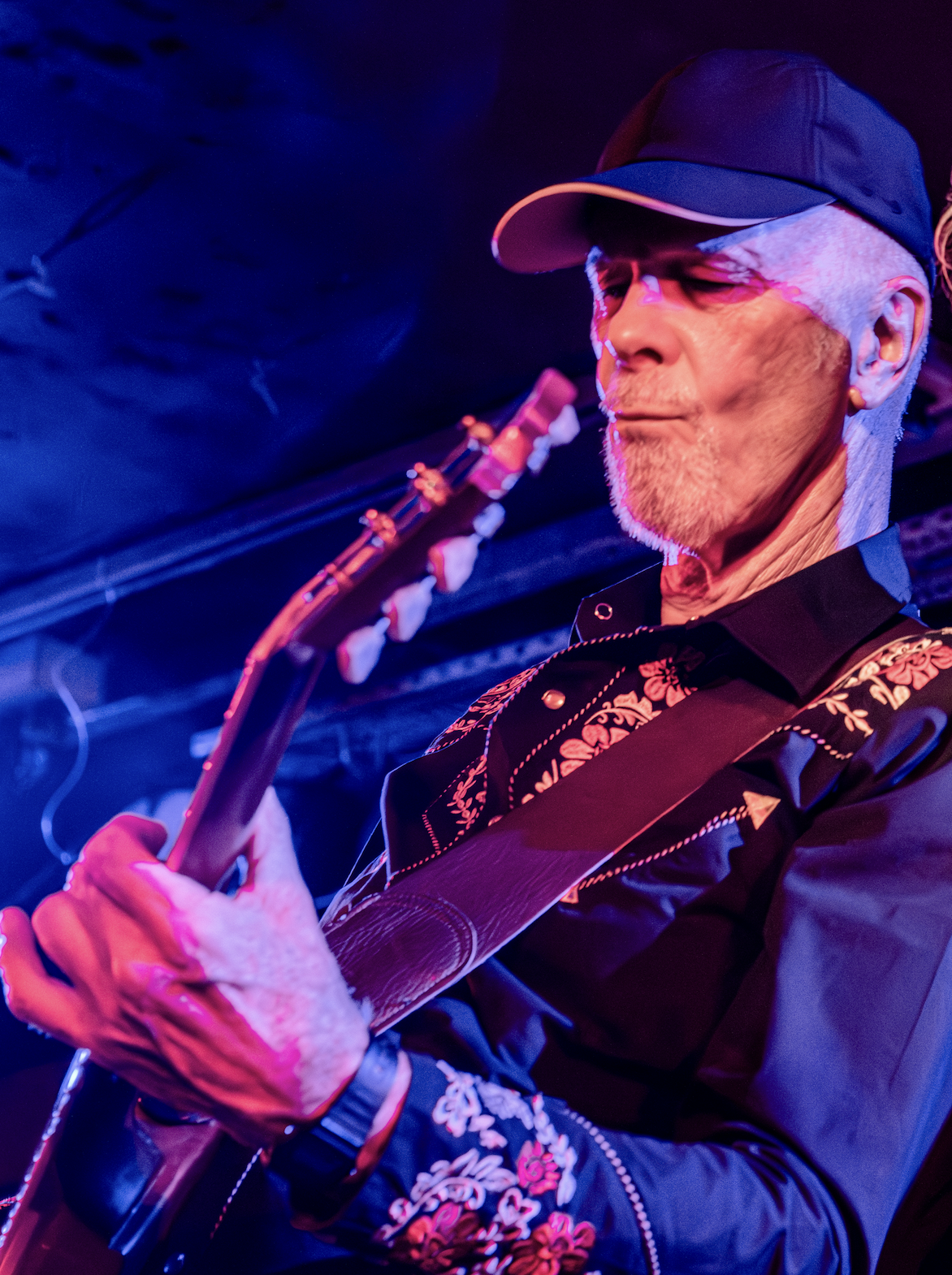
Geoff Peel
Guitar/Vocals
Biography
Geoff Peel started playing guitar after seeing the film of Cream's Farewell Concert when he was 15. His first proper band was The Mice, featuring former members of The Fruit Eating Bears and Nashville Teens, who released the single A Song For Europe on Charly Records. He went on to play with blues band Curly Maple and the Flametops, followed by The Diplomatics, alongside harmonica player Laurie Garman and former Taste bassist Charlie McCracken. Before joining DS4, Geoff spent several years with singer and harmonica player Tim Corbett in Gentleman Tim and the Contenders, recording the album Left Hook on the Blues.
Geoff first played with David Sinclair at the 100 Club in 2013. The chemistry was immediate and, after several people in the audience told him he ought to join the band, he did. He has been David's principal musical foil and songwriting partner ever since.
Q&A
What was the record, musician or gig that first established the direction you were heading in musically?
I saw the film of Cream's Farewell Concert when I was 15. At that time I had no idea what Eric Clapton was doing, but I immediately knew I had to learn. I got a guitar and bought the Bluesbreakers album, so it was straight in at the deep end and I've been swimming ever since.
How did you first become involved with DS4 - and what do you remember about the first time you played with the band?
In 2013 the DS Trio played at the 100 Club in Oxford Street and David invited me to sit in for a few songs. It went well, and afterwards several people told me I should be in the band. I said to each one, “Tell David” - and they must have, because he asked me to join a few days later.
What do you enjoy most about playing in DS4?
I really like the road trips and playing live. Everybody in the band plays their part and follows the old adage - “take no shit but don't be an asshole”.
Apart from your guitar and vocals, what do you bring to DS4?
Punctuality, reliability and a positive attitude. Plus I'm the band's unofficial guitar tech and equipment nerd.
Which DS4 song do you most enjoy playing, and why?
Well there's quite a few, but I always enjoy playing Give Me A Rose. It was one of the first songs I recorded with the band, it has a good structure and a nice feel - and it's in my favourite key.
What's the best or most memorable DS4 moment you've experienced so far?
Our show at the 100 Club in May seemed like a culmination of everything we've been working for.
What do you take almost as seriously as music?
I've been a rower as long as I've been a musician. There are a lot of similarities between being in a band and rowing in a crew, and sometimes in my dreams the two get mixed together, which can be kind of weird.
What happens between the two guitars in DS4 - and what do you particularly enjoy about the way you and David play together?
David is very solid, has good time, and gives me a lot of space for expression. When we play together we try to make it so the sum is greater than the parts. It's our version of Keith and Ronnie with a dash of Mick Taylor now and then.
When you and David write together, what does each of you tend to bring to the process?
David is an endless source of song ideas. I provide hooks, harmonies, guitar parts and bass lines with the occasional structural brainwave.
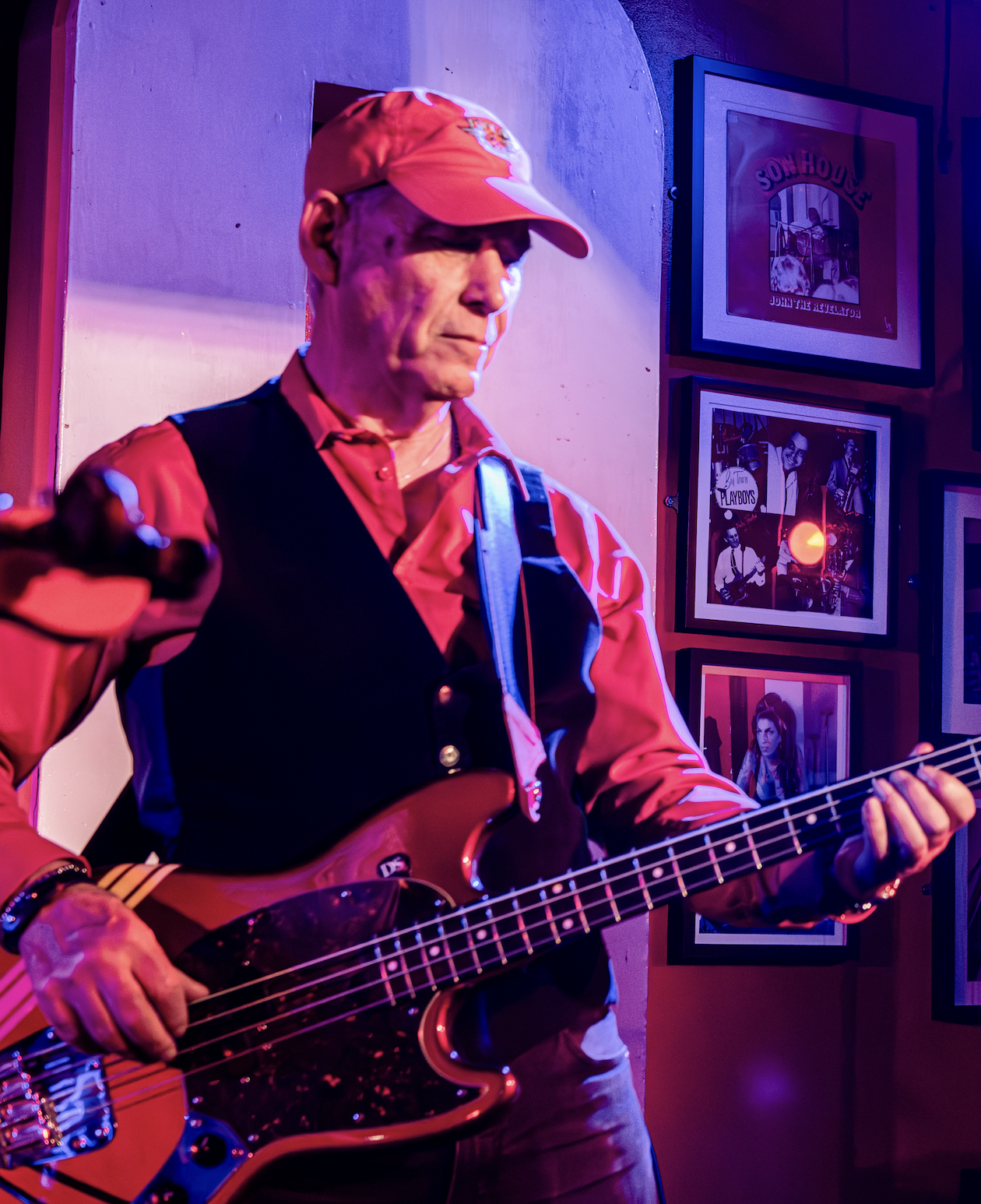
DEREK WHITE
BASS
BIOGRAPHY
Derek White began his musical career with London rock band Rich Mitzi, managed by Simon Napier-Bell. He later formed Storm Warning, recording five albums over 15 years, and backed American bluesman Eddie Blue Lester on an album for JSP Records.
In 2009 Derek joined singer, guitarist and songwriter Larry Miller, touring extensively in the UK and Europe and appearing on the double live album Live And Outlawed. He has also played with Australian keyboard player Lachy Doley (now with Joe Bonamassa) and former Whitesnake guitarist Bernie Marsden. A runner-up in the bass category of the UK Blues Awards, Derek continues to work with a remarkable range of bands and musicians. He first recorded with DS4 on Sweet Georgina in 2018.
Q&A
What was the record, musician or gig that first established the direction you were heading in musically?
Rory Gallagher, especially Live in Europe. I also listened to Jethro Tull, Mountain, The Doors, Family, Man, Caravan, Yes, ELP, Hendrix, The Groundhogs, Led Zeppelin and Wishbone Ash. That was the music that set me on the path.
How did you first become involved with DS4 - and what do you remember about the first time you played with the band?
I’d met David before and then got a call to dep on bass for a gig at The Murderers in Norwich. More calls followed and eventually I joined the band.
What do you enjoy most about playing in DS4?
The variety of the music and the band itself. David writes interesting songs and lyrics and DS4 isn’t like a lot of other bands playing similar venues.
Apart from your instrument, what do you bring to DS4?
Stability on bass and a lot of experience from band management, promoting and playing with many different musicians over the years.
Which DS4 song do you most enjoy playing, and why?
Two really. Life Gone Cold for the feeling, the lyrics and Geoff’s guitar playing. And Southern State for the southern rock groove and the room it gives me to stretch out.
What’s the best or most memorable DS4 moment you’ve experienced so far?
Headlining London’s 100 Club.
What do you take almost as seriously as music?
Football.
Of all the musicians you’ve played with over the years, who taught you something that you still bring to DS4?
When I started playing I was influenced by bass players like Jack Bruce, who played quite freely. Then I did a couple of gigs with original Jethro Tull drummer Clive Bunker. He said to me, “Listen to my bass drum and stick with me,” and told me my playing reminded him of Glenn Cornick.
That stayed with me. Since then my priority has always been to listen to the drummer and find the groove rather than play lots of bass notes.
You’ve been called “the hardest-working bass player in the south of England.” What keeps you doing it?
I still get a buzz from playing with different musicians, from recording and from playing live to an appreciative audience. These days I’m lucky enough to play the music I want to play.
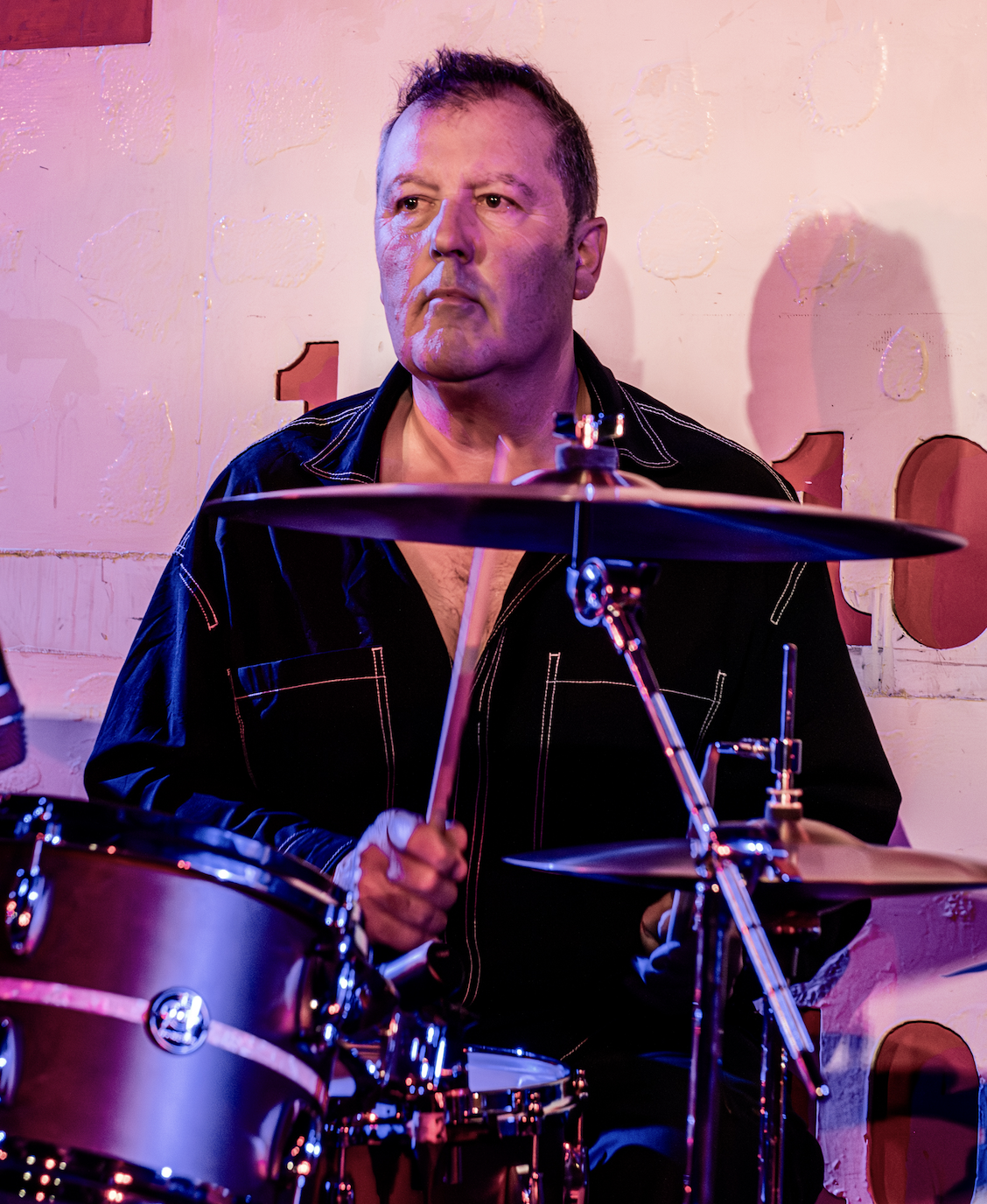
STEVE JESSOP
drums
BIOGRAPHY
Steve Jessop started playing in bands while at Hull University, where he played everything from rock and blues to new wave. His first significant break came with the Johnny Solo Band, who recorded with producer Nick Lowe. He later joined Nyam Nyam, who signed to Beggars Banquet and recorded at Strawberry Studios with Peter Hook of New Order. Steve also played with Bluefish, supporting Pulp along the way.
Since then he has played in numerous rock, blues and covers bands, building a reputation as a solid, dependable drummer who puts the song first. His route eventually led to “the pinnacle of DS4!”
Q&A
What was the record, musician or gig that first established the direction you were heading in musically?
The first Roxy Music album, followed by seeing them at Preston Guildhall when I was about 14. That was a huge turning point and really my entry into music. Then came Pink Floyd, Yes, Wishbone Ash, Rory Gallagher, Greenslade and John Martyn.
How did you first become involved with DS4 - and what do you remember about the first time you played with the band?
I’d played with Geoff at a jam and we’d had a small chat. Then Geoff called me and asked me along to a rehearsal. It was quite daunting because I admire the band as top musicians - don’t tell them that though.
What do you enjoy most about playing in DS4?
The professional approach and the love of music, whether we’re playing David and Geoff’s compositions or covers.
Apart from your instrument, what do you bring to DS4?
Solid, reliable dependability.
Which DS4 song do you most enjoy playing, and why?
I love all the songs. The sets are well curated and have a great flow, but if pushed I’d say Life Gone Cold. It gives me the hairs-on-the-back-of-the-neck feeling even when I’m just listening to it.
What’s the best or most memorable DS4 moment you’ve experienced so far?
The Scotland tour and the blues festivals were great because DS4 doesn’t really fit into the traditional blues format, but we got some great reviews. Headlining the 100 Club was also a bucket-list moment.
What do you take almost as seriously as music?
Friends and family. And cycling.
What’s the best thing about being the drummer - and what’s the worst?
The best thing is learning new stuff and always trying to improve. The worst is packing all the gear away after a gig. Maybe we’ll have roadies one day.
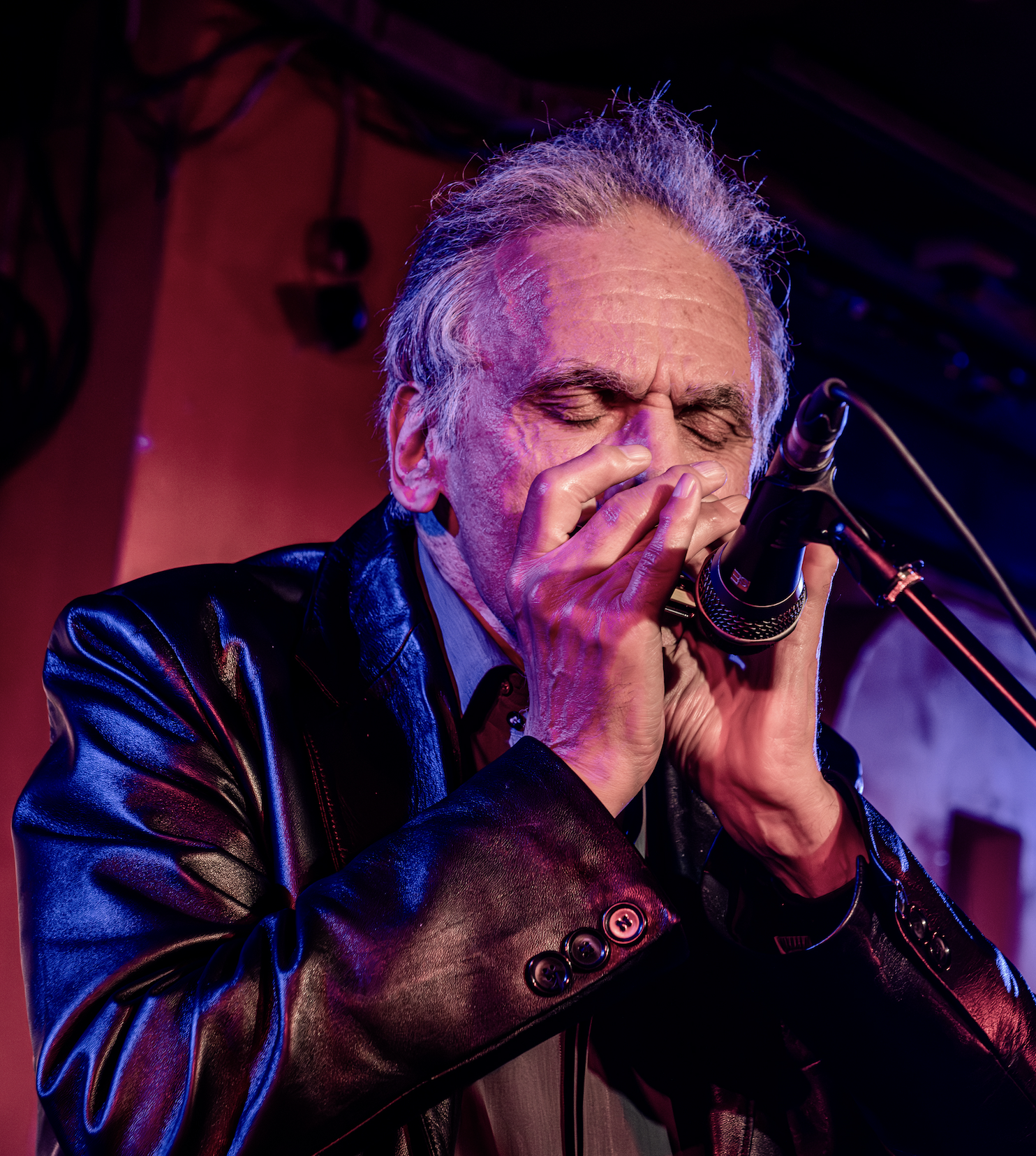
LAURIE GARMAN
Harmonica
BIOGRAPHY
Laurie Garman has played harmonica with an extraordinary range of artists and bands. His credits include The Yardbirds, The Inmates, The Count Bishops, Key Largo, The Cobras, The Michigan Flyers, Jeremiah Marques and the Blue Aces, Eddie Angel Blues Band, Mud Morganfield and Mark Olbrich’s Blues Eternity. He was also a member of The Diplomatics alongside Geoff Peel.
Laurie’s recording work includes sessions for Lightnin’ Slim, Bob Marley, Freddie King, Gerry Rafferty, Bloodstone, Billy Lee Riley and producer Mike Vernon’s two solo albums. Away from records, he has played on television theme and incidental music and even a party political broadcast. A long-time friend and musical associate of the band, Laurie has become known within DS4 as “the fifth member of the Four”.
Q&A
What was the record, musician or gig that first established the direction you were heading in musically?
Smokestack Lightning by Howlin’ Wolf, which I bought in 1964.
How did you first become involved with DS4 - and what do you remember about the first time you played with the band?
I first jammed with David and Geoff together at Geoff’s wedding reception. Geoff knows the year.
What do you enjoy most about playing in DS4?
Playing slightly different material from my normal R&B settings.
Apart from your instrument, what do you bring to DS4?
My amplifier and the occasional humorous comment.
Which DS4 song do you most enjoy playing, and why?
Whichever one is doing the business on the night.
What’s the best or most memorable DS4 moment you’ve experienced so far?
The best moments are always in the moment. They are ephemeral.
What do you take almost as seriously as music?
Remaining alive.
When did you realise you’d stopped being a guest and become the fifth member of the Four?
When I continued to get the call.